


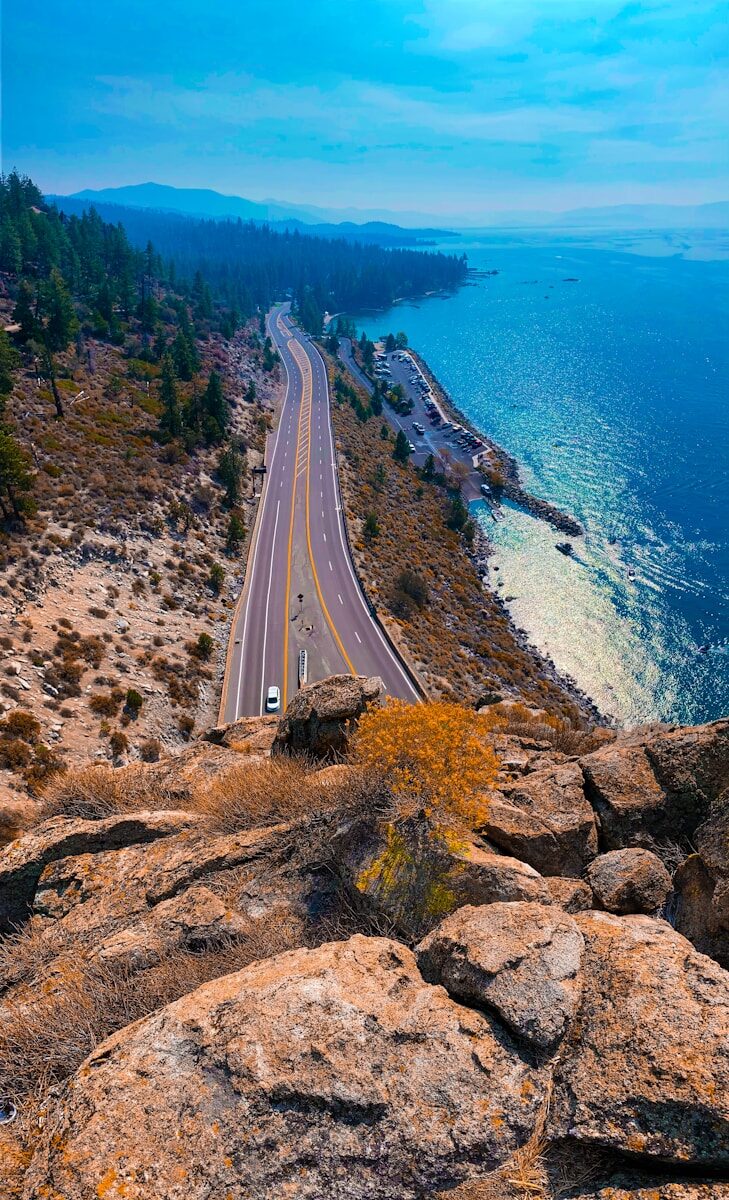
North America is a continent entirely within the Northern Hemisphere and almost entirely within the Western Hemisphere. It stretches from the Arctic Ocean in the north to the narrow Isthmus of Panama in the south, and it can also be considered a northern subcontinent of the Americas.
Geographically, North America includes Mexico, Central America, the Caribbean islands, Canada, and the United States. However, in common perception—especially within the region—the name is often used to refer to the United States and Canada alone.
This post explores the continent’s physical geography, focusing on its major landforms, their origins, and their significance.
Table of Contents
ToggleThe Canadian Shield
The Canadian Shield is the largest geographical region in North America by land area, yet it has the fewest inhabitants. It is composed of some of the hardest and oldest rocks on Earth—scientists estimate that at least 150 separate volcanic belts contributed to its formation.
This region was the first part of North America to be uplifted above sea level. During the ice ages, it became the centre of continental glaciations, which scoured the land, created thousands of lakes, marshes, and ponds, and left behind a thin, rocky soil.
The Shield covers portions of five Canadian provinces (Quebec, Ontario, Manitoba, Saskatchewan, and the Northwest Territories), four U.S. states (Minnesota, Wisconsin, Michigan, New York), and the world’s largest island, Greenland.
The Atlantic Coastal Plain
The Atlantic Coastal Plain is a broad, low‑lying plain stretching from Cape Cod southward to Florida and then west along the Gulf of Mexico to the Mexican border. It is generally flat, easily accessible, and historically important for settlement and agriculture.
Geologists divide it into two distinct sections:
-
North of Cape Fear, North Carolina: A submerged coastal zone where the land has slowly sunk, flooding river mouths and creating extensive estuaries (such as Pamlico Sound and Chesapeake Bay).
-
South of Cape Fear to Mexico: An emergent coastal plain where the land is slowly rising, resulting in well‑drained terraces, barrier islands, and broad sandy beaches.
The Coastal Plain features some of the most diverse and ecologically rich landforms in North America, including the Everglades, the Outer Banks, and the Mississippi River Delta.
The Piedmont
Lying between the Atlantic Coastal Plain and the Appalachian Mountains, the Piedmont is a transitional region of rolling hills and low plateaus. Its name comes from the Italian piede monte meaning “foot of the mountain.”
The Piedmont is sometimes called the “low mountains” region. In the western part, near the Blue Ridge Mountains, the terrain becomes more rugged, with isolated monadnocks (resistant rock outcrops) rising abruptly from the gently sloping surface. Diverse rock formations—including ancient granite, gneiss, and schist—create a varied landscape of folds, outcroppings, and low ridges.
This region is densely populated and includes major cities such as Atlanta, Charlotte, and Philadelphia.
The Appalachian Mountains
The Appalachians are the oldest mountain range in North America, formed approximately 650 million years ago during the collision of the North American and African plates. At their peak, they may have rivaled the Himalayas in height, but hundreds of millions of years of erosion have worn them down to rounded peaks and forested ridges.
The range extends from Newfoundland in Canada to central Alabama in the United States. It is a complex system of folded and faulted rocks, with distinct sub‑ranges including the Blue Ridge, the Valley and Ridge, and the Allegheny Mountains.
The Appalachians have historically served as a barrier to westward expansion, yet they also provided abundant timber, coal, and iron that fueled early American industry.
The Central Lowlands
The Central Lowlands form the agricultural heart of the North American continent. They are underlain by the vast drainage system of the Ohio, Mississippi, and Missouri rivers—one of the largest river basins in the world.
In the United States, these lowlands stretch from the Appalachian foothills west to the Great Plains. In Canada, they extend along the Great Lakes (Erie and Ontario) and the St. Lawrence River Valley. The terrain is generally flat to gently rolling, with deep, fertile soils deposited by ancient glaciers and river floods.
This region is ideal for mechanized agriculture and is home to the famous Corn Belt and Soybean Belt.
The Great Plains
At the very heart of North America, between the Rocky Mountains and the Mississippi River, lie the Great Plains—one of the continent’s largest landforms. Their most striking characteristic is flatness and vast open spaces, often called “the Great American Desert” by early explorers, though in reality they support extensive cattle ranching and dry‑farming of wheat.
The Great Plains encompass all or part of 15 U.S. states and three Canadian provinces (Alberta, Saskatchewan, Manitoba). In Canada they are known simply as “the Prairies.” The region is semi‑arid, with a strong continental climate—hot summers, cold winters, and moderate rainfall that makes irrigation essential for many crops.
The Western Mountains
West of the Great Plains, the land rises dramatically into the Western Mountains—a complex system of rugged ranges, high plateaus, and deep valleys. This region includes the Rocky Mountains, the Sierra Nevada, the Cascade Range, and the Coast Mountains.
-
Rocky Mountains: The easternmost range, extending from New Mexico through the western United States into Canada. Many peaks exceed 14,000 feet (4,267 m). The Rockies are young mountains (formed roughly 70–80 million years ago) and serve as the Continental Divide, separating rivers that flow to the Atlantic from those that flow to the Pacific.
-
Canadian Rockies: A segment of the Rockies that offers some of the most spectacular mountain scenery in the world, with jagged peaks, turquoise glacial lakes, and extensive national parks (Banff, Jasper, Yoho).
-
Western Cordillera (Canada): In western Canada, the region is known as the Western Cordillera—a broad belt of mountains and plateaus that includes the Rocky Mountains on the east and the Coast Mountains on the west. Some peaks in the Coast Mountains exceed 13,000 feet (3,962 m).
-
Pacific Coast Ranges: A series of mountain ranges that stretch from Alaska south through British Columbia, Washington, Oregon, California, and into northern Mexico. They run close to the Pacific Ocean, creating a narrow coastal plain and a rain‑shadow interior.
The Western Mountains are critically important for their influence on climate (blocking moisture, creating arid basins), as the source of major rivers (the Columbia, Colorado, Rio Grande), and as a recreational and scenic treasure.
Conclusion
North America’s physical geography is a story of ancient shields, young mountains, vast plains, and dynamic coastlines. From the hard, ancient rocks of the Canadian Shield to the towering peaks of the Western Cordillera, each landform has shaped where people live, how they farm, and how the continent’s economy developed.
Understanding these regions is not just an academic exercise—it is a window into the environmental diversity and human geography of one of the world’s most influential continents.
Sources: Information drawn from standard physical geography references, including the U.S. Geological Survey, Natural Resources Canada, and academic texts on North American landforms. The classification follows common physiographic divisions used in North American geography.
Related Posts
Uncategorized- 10 AI Video Generators That Will Make You a Viral Creator Overnight →
- Credit Card Secrets in the USA You Didn’t Know 💳🇺🇸 →
- USA Credit Card System Explained for Beginners 💳🇺🇸 →
- Credit Score in the USA: Why It Matters So Much (And How to Build It Fast) →
- 🇺🇸 USA Job Market 2026 – Full Research Breakdown (No Hype, Just Reality) →
